


Solid Wedge vs Flexible Wedge vs Split Wedge Gate Valve: Differences, Advantages & Selection Guide
Selecting the correct wedge design is one of the most important decisions when specifying a gate valve. While all wedge gate valves perform the same primary function, isolating the flow of fluids, they do not all perform equally under different operating conditions.
Choosing the wrong wedge design can result in excessive operating torque, seat leakage, wedge sticking due to thermal expansion, increased maintenance costs, and even unplanned plant shutdowns. Whether your application involves steam, oil and gas, chemical processing, water treatment, or power generation, understanding the differences between Solid Wedge, Flexible Wedge, and Split Wedge Gate Valves helps ensure long-term reliability and safe operation.
In this guide, we’ll compare all three wedge gate valve designs, explain how they work, discuss their advantages and limitations, and help you determine which option is best suited for your operating conditions.
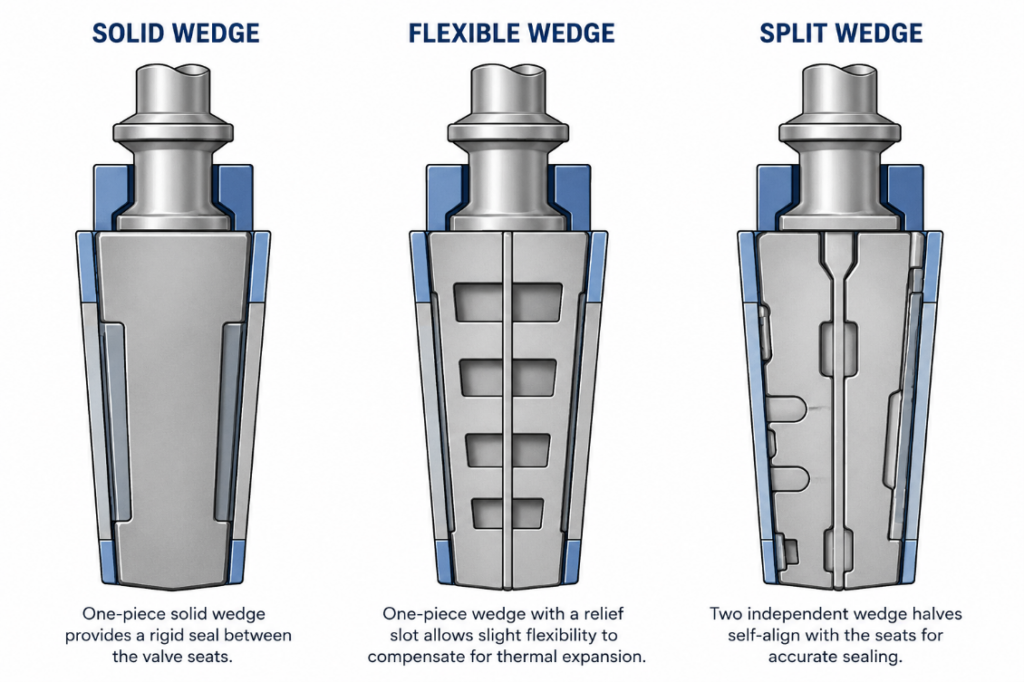
The main difference between Solid Wedge, Flexible Wedge, and Split Wedge Gate Valves is how the wedge seals against the valve seats. A Solid Wedge uses a rigid one-piece design, a Flexible Wedge incorporates a machined groove that compensates for thermal expansion, while a Split Wedge uses two independent wedge halves that improve seat alignment. The best design depends on operating temperature, pressure, thermal cycling, and service conditions.
Why Are Different Wedge Designs Used?
Many engineers assume that every gate valve closes in exactly the same way. In reality, the wedge is the heart of the valve’s sealing system, and its design directly affects performance.
Industrial pipelines are exposed to changing temperatures, varying pressures, vibration, corrosion, and thermal expansion. As valve bodies expand and contract during operation, the sealing surfaces can become slightly misaligned. A wedge design that performs well in a water distribution system may not perform efficiently in a high-temperature steam line.
To overcome these challenges, manufacturers developed three primary wedge designs:
- Solid Wedge
- Flexible Wedge
- Split Wedge
Each design addresses specific engineering challenges while offering different advantages in terms of sealing performance, operating torque, maintenance, and service life.
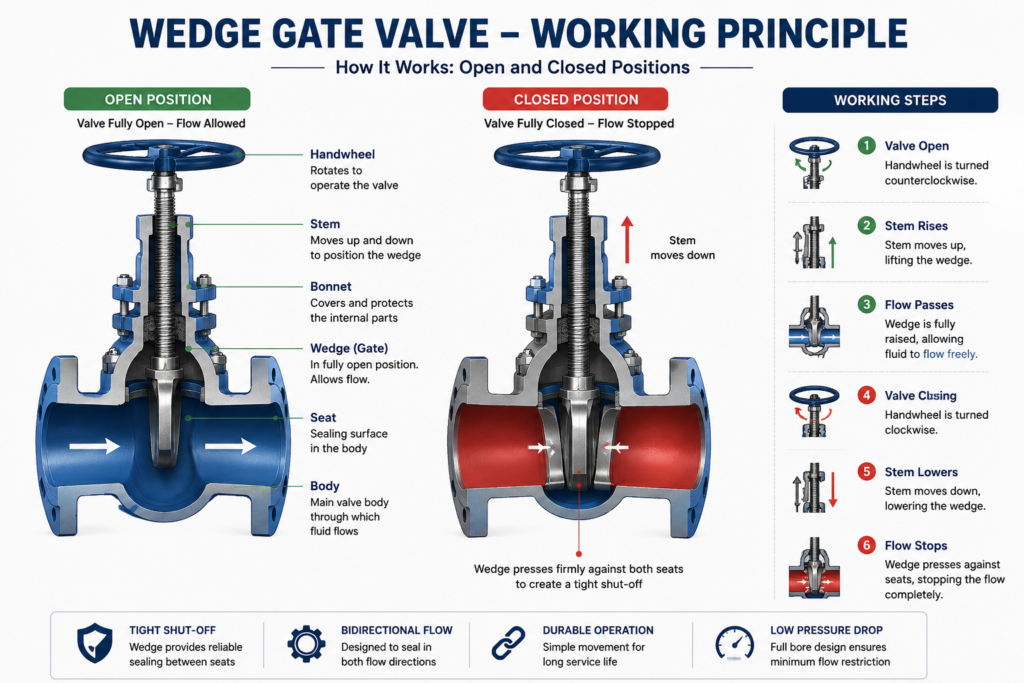
Understanding the Three Wedge Designs
Solid Wedge Gate Valve
A Solid Wedge Gate Valve uses a single-piece, rigid wedge that moves vertically between two seating surfaces. Because the wedge is machined from one solid piece, it provides excellent strength and durability.
Best Features
- Simple construction
- High mechanical strength
- Excellent sealing under stable operating conditions
- Cost-effective manufacturing
- Long service life
Best Applications
- Water distribution
- Oil pipelines
- Natural gas systems
- General industrial service
- Moderate temperature applications
Advantages
- Strong construction
- Economical
- Simple maintenance
- Reliable under stable conditions
Limitations
Because the wedge is rigid, it cannot compensate for seat distortion caused by thermal expansion. In high-temperature services, the wedge may stick after closing if the valve body expands significantly.
Flexible Wedge Gate Valve
A Flexible Wedge Gate Valve is manufactured as a single piece but includes a machined groove or slot around its circumference. This groove allows the wedge to flex slightly during operation.
This small amount of flexibility helps the wedge maintain proper contact with both seats, even when thermal expansion or slight seat misalignment occurs.
Best Features
- Better sealing under thermal cycling
- Reduced risk of wedge sticking
- Lower operating torque
- Improved reliability in steam service
- Excellent for fluctuating temperatures
Best Applications
- Steam pipelines
- Power plants
- Refineries
- Petrochemical facilities
- High-temperature processing plants
Advantages
- Better sealing
- Reduced operating torque
- Handles thermal cycling effectively
- Lower risk of leakage
Limitations
The flexible design is more complex to manufacture and generally costs more than a standard solid wedge.
Split Wedge Gate Valve
A Split Wedge Gate Valve consists of two separate wedge halves that independently contact the valve seats. This allows each half to align itself automatically with the seating surfaces.
The design provides excellent seating even when slight manufacturing tolerances or seat irregularities exist.
Best Features
- Excellent seat alignment
- Reliable sealing
- Lower closing force
- Smooth operation
- Reduced seat wear
Best Applications
- Low-pressure systems
- Water treatment
- Chemical processing
- Large diameter pipelines
- Systems requiring accurate seating
Advantages
- Excellent seating accuracy
- Independent seat alignment
- Smooth operation
Limitations
The two-piece construction contains more moving parts and generally requires closer manufacturing tolerances.
Solid Wedge vs Flexible Wedge vs Split Wedge Gate Valve
Feature |
Solid Wedge |
Flexible Wedge |
Split Wedge |
| Construction | Single rigid wedge | Single wedge with relief groove | Two independent wedges |
| Thermal Expansion Resistance | Moderate | Excellent | Very Good |
| Seat Alignment | Fixed | Self-adjusting (slight) | Self-aligning |
| Steam Service | Good | Excellent | Moderate |
| High Temperature | Good | Excellent | Good |
| Operating Torque | Moderate | Lower | Lower |
| Manufacturing Complexity | Low | Medium | High |
| Maintenance | Low | Low | Moderate |
| Cost | Lowest | Medium | Highest |
| Best Use | General isolation | Steam & thermal cycling | Precise seating applications |
How the Wedge Design Affects Sealing Performance
Although all three designs create a tight shut-off, they achieve sealing differently.
A Solid Wedge depends entirely on precise machining and rigid contact with both seats. This makes it extremely strong but less forgiving if the valve body distorts due to temperature.
A Flexible Wedge allows controlled movement within the wedge itself. This flexibility distributes seating force more evenly, reducing localized stress and improving sealing under changing operating conditions.
A Split Wedge uses two independently moving halves that automatically adjust to the seat angle. This ensures consistent contact and reduces uneven wear.
The result is improved reliability, especially where precise seating is critical.
Which Wedge Design Is Best for Different Industries?
Different industries face different operating challenges.
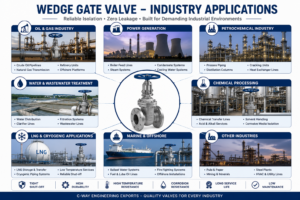
Oil & Gas
Solid Wedge and Flexible Wedge designs are both widely used depending on operating temperature.
Steam Systems
Flexible Wedge Gate Valves are generally preferred because they accommodate thermal expansion and repeated heating and cooling cycles.
Power Generation
Flexible Wedge valves are commonly specified for high-pressure, high-temperature steam applications where reliable sealing is essential.
Water Distribution
Solid Wedge valves remain a practical and economical choice for municipal water systems and general utility services.
Chemical Processing
Selection depends on media compatibility, operating temperature, and pressure. Flexible or Split Wedge designs may be preferred where sealing accuracy is especially important.
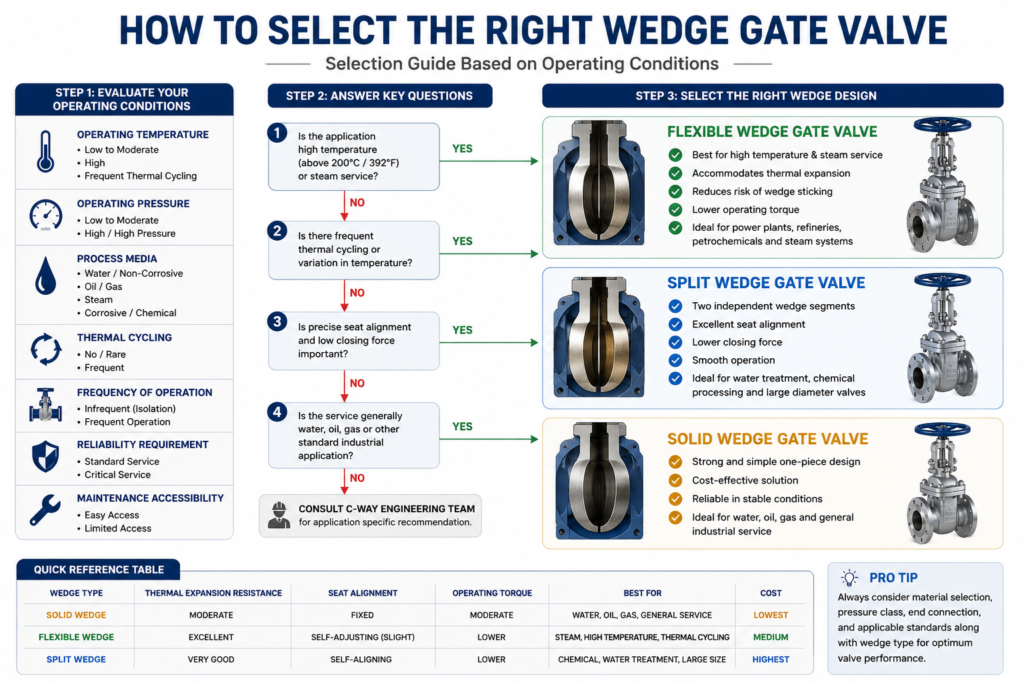
How to Choose the Right Wedge Gate Valve
Selecting the correct wedge design should never be based on price alone.
Consider the following factors:
- Operating temperature
- Pressure rating
- Type of process fluid
- Frequency of operation
- Thermal cycling
- Maintenance accessibility
- Plant reliability requirements
As a general guideline:
- For stable operating conditions, a Solid Wedge often provides the best value.
- For high-temperature steam service, a Flexible Wedge is usually the preferred choice.
- For applications requiring accurate seating and smooth operation, a Split Wedge can provide additional benefits.
Every application should also consider material selection, pressure class, and compliance with applicable standards.
Common Mistakes When Selecting a Wedge Gate Valve
Even experienced buyers occasionally overlook factors that influence long-term valve performance.
Some common mistakes include:
- Selecting a valve based only on purchase price.
- Ignoring thermal expansion in steam service.
- Using a gate valve for throttling applications.
- Choosing the wrong pressure class.
- Overlooking maintenance requirements.
- Focusing only on body material while ignoring wedge design.
Avoiding these mistakes can significantly improve valve life and reduce maintenance costs.
Conclusion
There is no universal “best” wedge design. Each has been developed to solve different engineering challenges.
Solid Wedge Gate Valves remain an excellent choice for many general industrial applications because of their simplicity, durability, and cost-effectiveness.
Flexible Wedge Gate Valves provide superior performance where temperature fluctuations and thermal expansion are common, making them a preferred option for steam and power generation.
Split Wedge Gate Valves offer excellent seat alignment and reliable sealing in applications where precise seating performance is required.
By understanding how each wedge design works, engineers and procurement teams can select a valve that delivers reliable shut-off, longer service life, and lower maintenance costs.
In the next article in this series, we’ll take a deeper look at Flexible Wedge Gate Valves, including their internal design, working principle, advantages, and why they are widely used in high-temperature industrial systems.
Frequently Asked Questions
1. What is the main difference between a Solid Wedge, Flexible Wedge, and Split Wedge Gate Valve?
2. Which wedge gate valve is best for high-temperature steam applications?
3. Why do Solid Wedge Gate Valves sometimes stick after operation?
4. When should a Split Wedge Gate Valve be selected?
5. Which wedge design provides the best sealing performance?
6. Does the wedge design affect valve operating torque?
7. Are Flexible Wedge Gate Valves more expensive than Solid Wedge Gate Valves?
8. Can a Solid Wedge Gate Valve be used in steam service?
9. Which wedge gate valve requires the least maintenance?
10. How do I choose the right wedge gate valve for my application?
11. Which industries commonly use Solid, Flexible, and Split Wedge Gate Valves?
Flexible Wedge Gate Valves: Power plants, refineries, petrochemical facilities, and high-temperature steam systems.
Split Wedge Gate Valves: Chemical processing, water treatment, large-diameter pipelines, and applications requiring precise seat alignment.
12. Which wedge gate valve is best for steam service?
13. Which wedge gate valve offers the lowest maintenance?
- 1. Why Are Different Wedge Designs Used?
- 2. Understanding the Three Wedge Designs
- 3. Solid vs Flexible vs Split (Comparison Table)
- 4. How Wedge Design Affects Sealing Performance
- 5. Best Wedge Design by Industry
- 6. How to Choose the Right Valve
- 7. Common Selection Mistakes
- 8. Conclusion
- 9. Frequently Asked Questions


