


DIN PN10 vs PN16 Butterfly Valve: Pressure Rating vs Real Working Pressure Explained
In European industrial piping systems, engineers and procurement specialists often compare DIN PN10 vs PN16 butterfly valves when specifying valves for water treatment plants, HVAC networks, chemical processing lines, and marine applications. At first glance, the distinction appears straightforward – PN10 indicates 10 bar and PN16 indicates 16 bar, yet real-world operating conditions reveal a far more technical reality.
Many buyers assume that a higher PN rating automatically delivers better performance. Experienced valve engineers know this is not always true. Nominal pressure classification does not represent actual working pressure, as factors such as operating temperature, body material strength, disc geometry, and built-in safety margins all influence how a butterfly valve performs within a pipeline.
This technical guide explores the true engineering differences between PN10 and PN16 butterfly valves under DIN and EN standards, helping industrial users make informed decisions without over specifying equipment or compromising long-term reliability
What Does DIN PN10 and PN16 Mean in Butterfly Valves?
The PN classification used in DIN EN butterfly valves refers to Nominal Pressure, a standardized reference defining structural design, flange compatibility, and pressure testing levels – not guaranteed continuous operating pressure.
Nominal Pressure vs Operating Pressure
PN ratings define:
- Mechanical design category
- Hydrostatic shell and seat test levels
- Flange drilling and dimensional standards
- Structural safety margins
A DIN PN16 butterfly valve is engineered with higher structural strength compared to PN10, but it should not always be operated at maximum rated pressure continuously.
DIN EN Standards Governing Butterfly Valves
European butterfly valves are typically designed according to:
- EN 593 – Industrial butterfly valve requirements
- EN 558 – Face-to-face dimensions
- ISO 5211- Actuator mounting interface
These standards ensure interchangeability across European pipelines and automation systems.
Pressure Rating vs Real Working Pressure – Engineering Reality
One of the biggest misconceptions in valve selection is assuming PN rating equals real working pressure.
Temperature Impact on Pressure Capability
As temperature increases, allowable pressure decreases. Elastomer seats such as EPDM or NBR change behaviour under heat, affecting sealing and pressure limits. Engineers often choose PN16 valves to maintain a safety margin under fluctuating temperature conditions.
Material Strength and Safety Factors
Body material significantly affects performance:
- GG25 grey cast iron – commonly used in PN10 water systems
- GGG40 ductile iron – widely used for PN16 industrial pipelines
- Stainless steel – preferred for corrosive or aggressive media
Industrial Valve manufacturers include safety factors during testing, but long-term operation near maximum rating reduces service life.
Construction Differences Between PN10 and PN16 Butterfly Valves
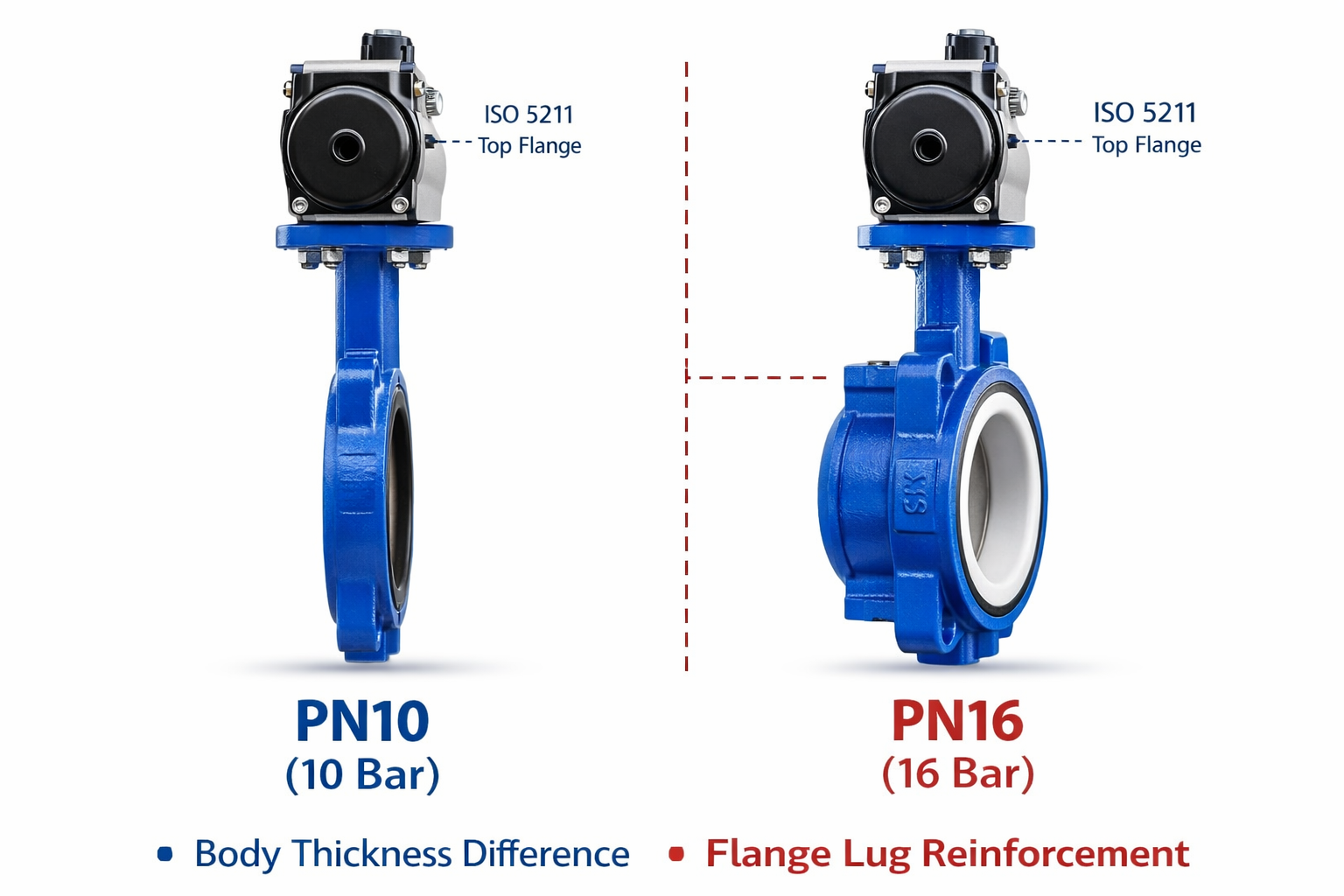
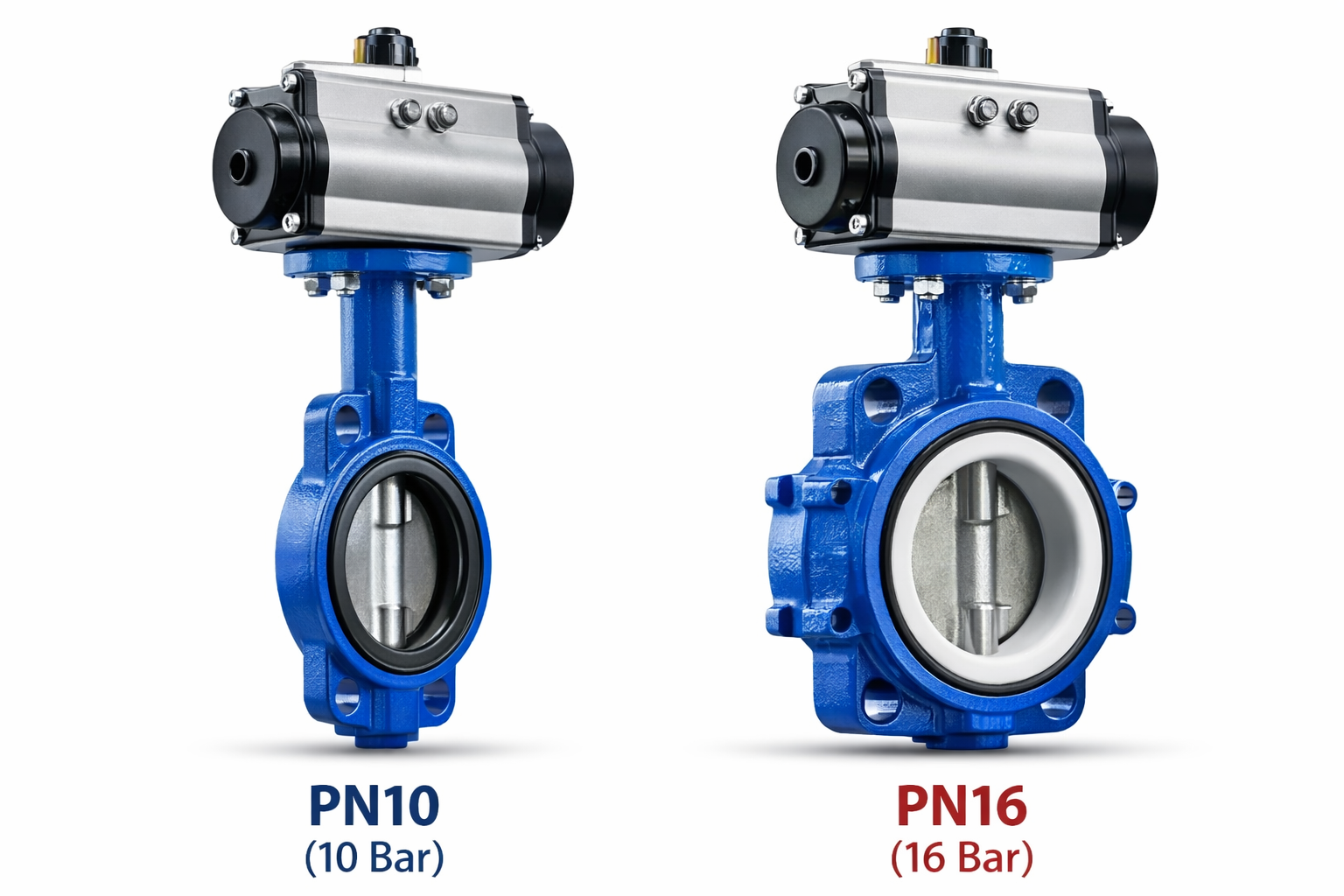
Although DIN PN10 and PN16 Butterfly Valve may look similar externally, internal engineering differences are important.
Body Thickness and Structural Design
PN16 butterfly valves typically feature:
- Thicker body walls
- Reinforced flange area
- Higher resistance to deformation under pressure
Disc and Shaft Engineering
Higher pressure classes require:
- Stronger shaft support
- Optimized disc profile
- Improved seat compression
These design differences directly influence torque, sealing performance and durability.
DIN Flange Compatibility – Can PN10 and PN16 Replace Each Other?
This is one of the most common technical questions asked by engineers.
Can PN16 Butterfly Valve Replace PN10?
Yes, in many DIN EN pipelines a PN16 butterfly valve can replace PN10 because flange drilling often aligns. Many European buyers standardize on PN16 to simplify inventory.
Can PN10 Replace PN16?
Not always recommended. Even if bolt holes match, the valve body may not be designed for higher pressure zones. Incorrect installation can lead to leakage or reduced lifespan.
Always verify flange rating, drilling standard, and system design pressure before replacement.
Torque Requirements and Actuator Selection
Pressure class directly affects operating torque.
PN10 vs PN16 Torque Difference
Higher pressure increases:
- Disc sealing force
- Seat friction
- Differential pressure load
PN16 butterfly valves generally require higher torque than PN10 valves of the same size.
For automated systems:
- Recalculate torque when upgrading pressure class
- Include safety margin for pneumatic or electric actuators
Avoid undersized actuators that may cause incomplete closure or seat damage
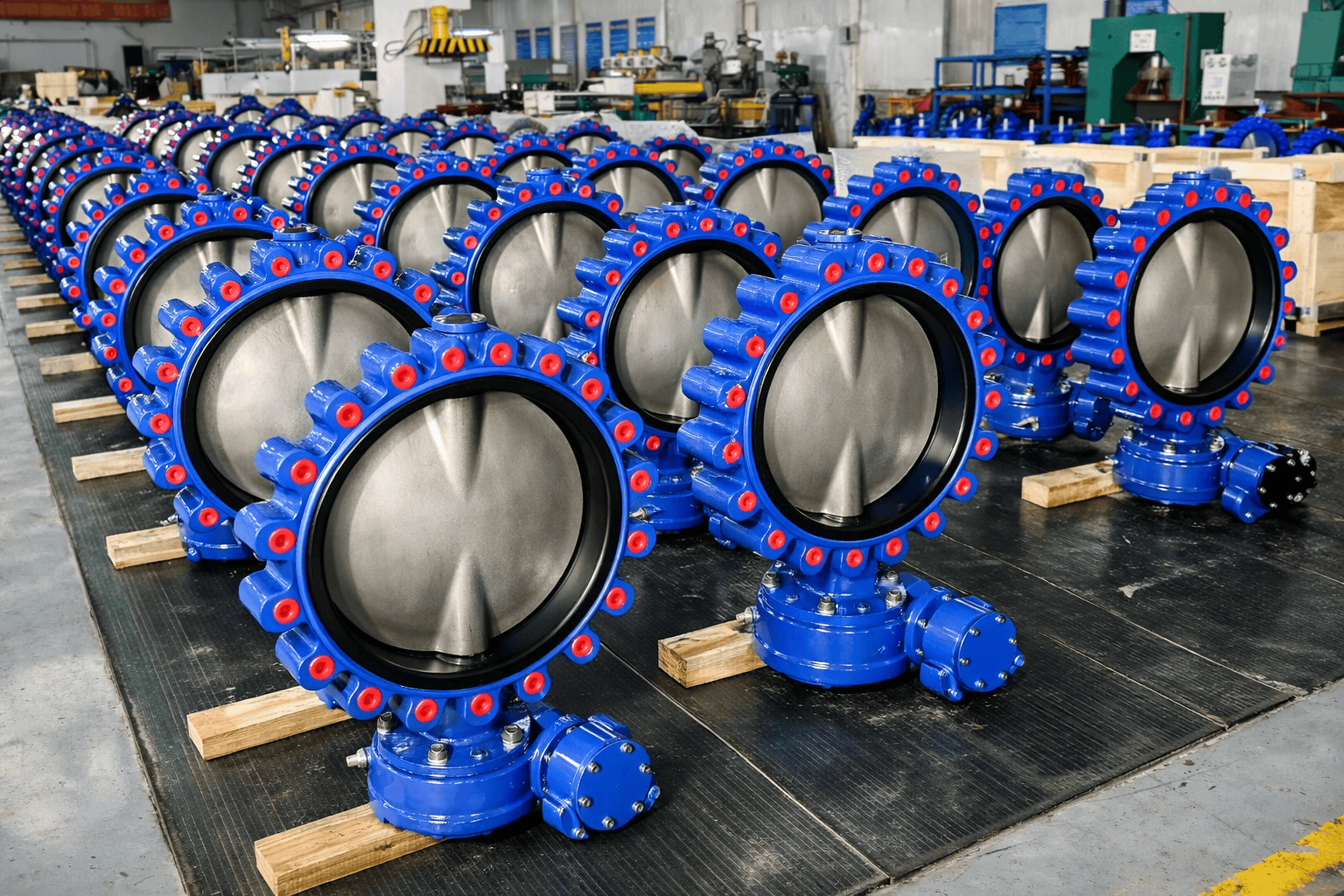
Application Comparison – Where PN10 or PN16 Butterfly Valves Are Used
PN10 valves are widely used in low-pressure water distribution systems. PN16 valves are preferred near pump discharge lines.
- HVAC Systems
HVAC pipelines often operate below 10 bar, making PN10 economical, while PN16 provides additional safety where pressure spikes occur.
Process industries typically prefer PN16 for stronger construction and improved reliability under variable conditions.
- Marine and Offshore Applications
Marine systems generally require PN16 valves due to vibration, pressure variation, and stricter safety requirements.
Cost vs Performance – Choosing the Right Pressure Class
Many buyers assume PN16 is always superior. In reality:
- PN16 valves are heavier and more expensive
- Higher torque may require larger actuators
- Over specification increases project cost
PN10 valves remain efficient and reliable for low-pressure applications. Correct engineering selection balances performance with economic efficiency.
Common Engineering Mistakes in DIN PN10 vs PN16 Selection
- Treating PN rating as continuous operating pressure.
- Ignoring temperature derating effects.
- Selecting PN10 only based on price.
- Forgetting torque recalculation when switching to PN16.
- Assuming flange rating equals valve structural strength.
Avoiding these mistakes improves reliability and reduces maintenance issues.
How to Choose DIN PN10/ PN16 Valves Correctly
Choose DIN PN10 Butterfly Valves when:
- System pressure remains consistently low
- HVAC or water distribution service is required
- Cost efficiency is important
Choose DIN PN16 Butterfly Valves when:
- Pressure fluctuations exist
- Industrial processes demand stronger design
- Additional safety margin is required
Understanding real operating conditions – not just nominal ratings – ensures long-term performance and safe operation.
Planning a DIN PN10 or PN16 butterfly valve project?
Partner with C-Way Engineering Exports for precision-engineered, DIN EN compliant valve solutions trusted across water treatment, HVAC, chemical processing, marine, and industrial pipelines. Our team supports you from technical selection to final supply – helping you choose the right valve.
Contact C-Way Engineering Exports today to discuss your application and get expert technical support.


