

Socket Weld vs Threaded Fittings: Which Connection Type Is Best for Industrial Piping Systems?
Industrial piping systems rely on strong and dependable connections to safely transport liquids, gases, steam, chemicals, and other process media. Whether it’s an oil refinery, chemical processing plant, power station, water treatment facility, or manufacturing unit, the reliability and efficiency of the entire piping system depend greatly on the fittings used.
Two of the most widely used forged steel fitting connection types are Socket Weld Fittings and Threaded Fittings. Both are commonly manufactured in accordance with ASME B16.11 standards and are used across a wide range of industrial applications. ASME B16.11 dimensions, pressure classes, and selection considerations are discussed in our ASME B16.11 forged pipe fittings guide. However, each connection type has its own advantages, limitations, and ideal use cases when it comes to pressure handling, installation, maintenance, and long-term performance.
Selecting the right fitting is an important engineering decision. A connection that is not suited to the application can result in leakage, increased maintenance costs, unplanned downtime, or even safety risks. That’s why engineers, project managers, procurement teams, and plant maintenance professionals often compare socket weld and threaded fittings before finalizing a piping design.
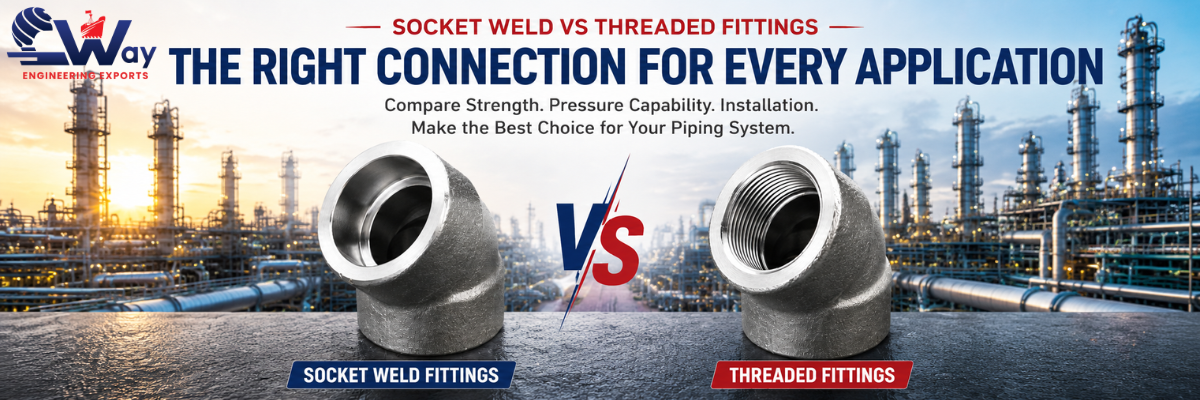
In this guide, we’ll take a closer look at Socket Weld vs Threaded Fittings, comparing their design, pressure capability, leak resistance, installation requirements, maintenance considerations, and typical industrial applications to help you choose the best option for your piping system.
Quick Overview
Socket weld fittings are generally preferred for high-pressure, high-temperature, and critical industrial applications because they provide superior leak resistance and mechanical strength through a welded connection. Threaded fittings are easier to install and maintain, making them suitable for utility systems, instrumentation lines, and low to medium pressure applications where frequent disassembly may be required.
What Are Socket Weld Fittings?
Socket weld fittings are forged steel fittings designed for high-pressure and high-temperature piping systems. In a socket weld connection, the pipe is inserted into a recessed socket and then welded around the joint, creating a strong and leak-resistant connection.
Because of their excellent strength and vibration resistance, socket weld fittings are widely used in refineries, petrochemical plants, steam systems, hydraulic lines, and other critical industrial applications. They are commonly available in sizes from ½” to 4″ and pressure classes such as Class 3000, 6000, and 9000.
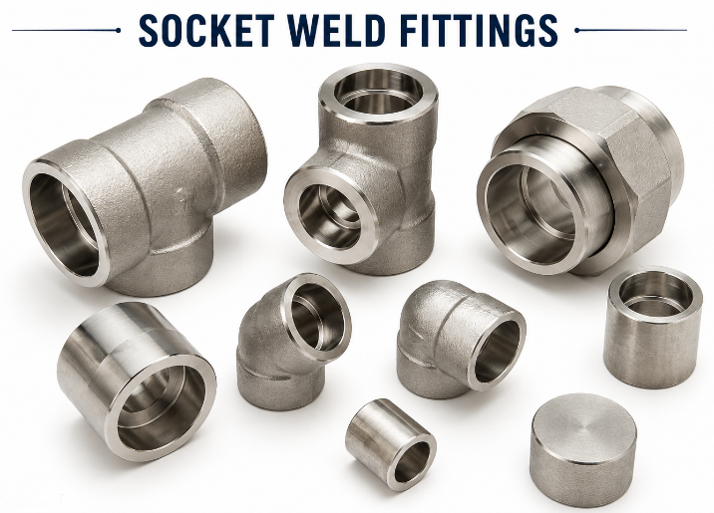
Common types of socket weld fittings include:
- Socket Weld Elbows
- Socket Weld Tees
- Socket Weld Couplings
- Socket Weld Unions
- Socket Weld Crosses
- Socket Weld Caps
Advantages of Socket Weld Fittings
- Excellent leak resistance
- High pressure capability
- Strong mechanical connection
- Superior vibration resistance
- Long service life
Limitations of Socket Weld Fittings
- Requires welding during installation
- Higher installation costs
- Difficult to dismantle after installation
Typical Applications
Socket weld fittings are commonly used in:
- Oil & Gas Processing
- Refineries
- Petrochemical Plants
- Steam Systems
- Hydraulic Systems
- Power Generation Facilities
- High-Pressure Utility Piping
What Are Threaded Fittings?
Threaded fittings, also known as screwed fittings, are pipe fittings that connect to pipes through threaded connections instead of welding. The fitting and pipe have matching threads that are screwed together to create a secure and pressure-tight connection.
The most commonly used thread standard is NPT (National Pipe Thread). However, as a global supplier, threaded fittings are also available in BSP, BSPT, NPT, and other international thread standards to meet the requirements of different countries and piping systems.
Threaded fittings are widely used in applications where welding is not practical or where future disassembly and maintenance may be required. Since no welding equipment is needed, they offer a quick and cost-effective installation solution.
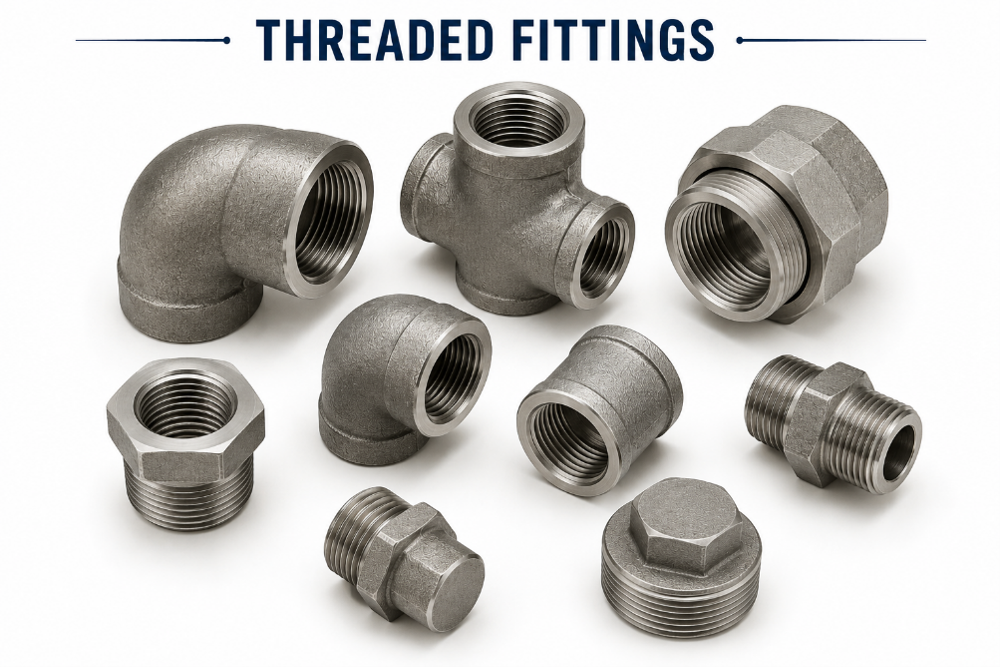
Common types of threaded fittings include:
- Threaded Elbows
- Threaded Tees
- Threaded Couplings
- Threaded Bushings
- Threaded Unions
- Threaded Plugs
Advantages of Threaded Fittings
- No welding required
- Quick and easy installation
- Lower installation costs
- Easy disassembly and replacement
- Ideal for maintenance-friendly systems
- Available in NPT, BSP, BSPT, and other thread types
Limitations of Threaded Fittings
- Higher risk of leakage compared to welded connections
- Less resistant to vibration and cyclic loading
- Threads can be damaged during installation
- Potential corrosion in thread roots
- Generally not recommended for critical high-pressure applications
Typical Applications
Threaded fittings are commonly used in:
- Compressed Air Systems
- Instrumentation Lines
- Water Distribution Systems
- Utility Piping
- Building Services
- Fire Protection Systems
- Maintenance and Repair Applications
Socket Weld vs Threaded Fittings: Detailed Comparison
| Parameter | Socket Weld Fittings | Threaded Fittings |
| Connection Method | Welded Connection | Threaded Connection |
| Pressure Capability | Excellent for High-Pressure Service | Suitable for Low to Medium Pressure Service |
| Leak Resistance | Superior Leak Resistance | Good with Proper Thread Sealant |
| Installation Time | Moderate | Fast |
| Maintenance Access | Difficult | Easy |
| Welding Required | Yes | No |
| Vibration Resistance | Excellent for Pumps and Compressors | Moderate, May Loosen Over Time |
| Initial Installation Cost | Higher | Lower |
| Long-Term Reliability | Excellent | Good |
| Corrosion Risk | Lower | Higher |
| Disassembly | Difficult | Easy |
| Best Use | High-Pressure Service | Utility Service |
Pressure and Leak Performance Comparison
One of the most important considerations when selecting industrial pipe fittings is pressure performance.
Socket Weld Fittings for High-Pressure Applications
Socket weld fittings are specifically designed for high-pressure and high-temperature environments. The welded joint forms a continuous metal connection that distributes loads evenly throughout the assembly.
Understanding pressure classes such as Class 3000, 6000, and 9000 is essential when selecting forged fittings for critical piping systems.
This design offers several benefits:
- Reduced leakage risk
- Higher structural strength
- Better pressure containment
- Improved resistance to thermal cycling
For these reasons, socket weld fittings are commonly specified in refinery piping, steam systems, chemical processing plants, and hydraulic applications.
Threaded Fittings for Moderate Pressure Applications
Threaded fittings can handle substantial pressure when installed correctly. However, the integrity of the connection depends on:
- Thread quality
- Proper thread engagement
- Correct tightening torque
- Sealant application
As operating pressure increases, the risk of leakage through the threaded connection also increases.
In critical applications involving hazardous fluids or high pressures, many engineers prefer welded connections for added security.
Which Offers Better Leak Protection?
In most industrial environments, socket weld fittings provide superior leak resistance because the welded joint eliminates many potential leak paths associated with threaded connections.
Installation and Maintenance Comparison
Installation requirements often influence fitting selection, particularly for projects with tight schedules or maintenance-intensive systems.
Installing Socket Weld Fittings
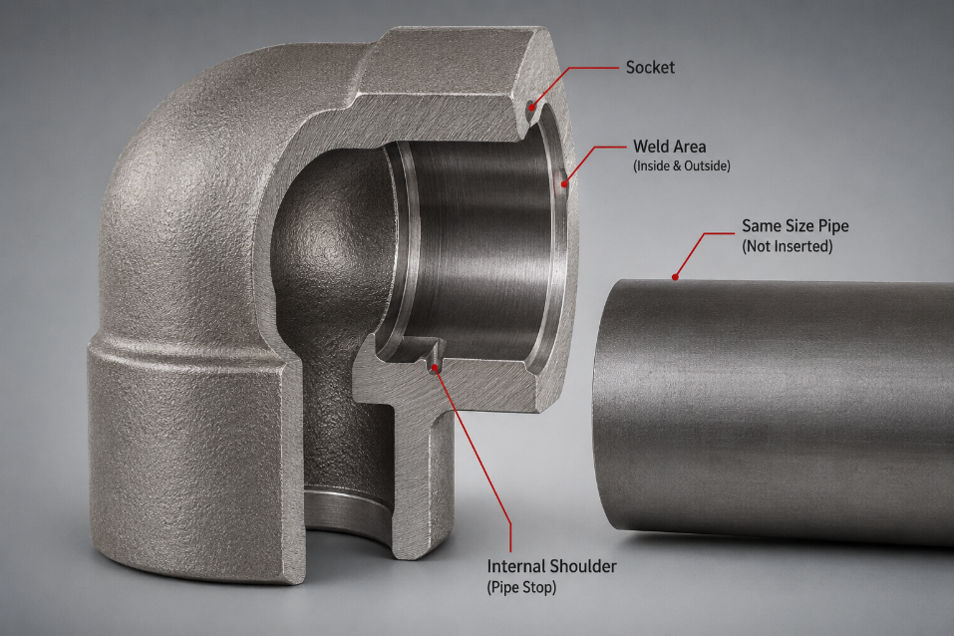
The installation process generally involves:
- Pipe preparation
- Pipe insertion into the socket
- Maintaining expansion gap
- Fillet welding
- Inspection and testing
Although installation requires skilled labor, the resulting connection is extremely reliable.
Installing Threaded Fittings
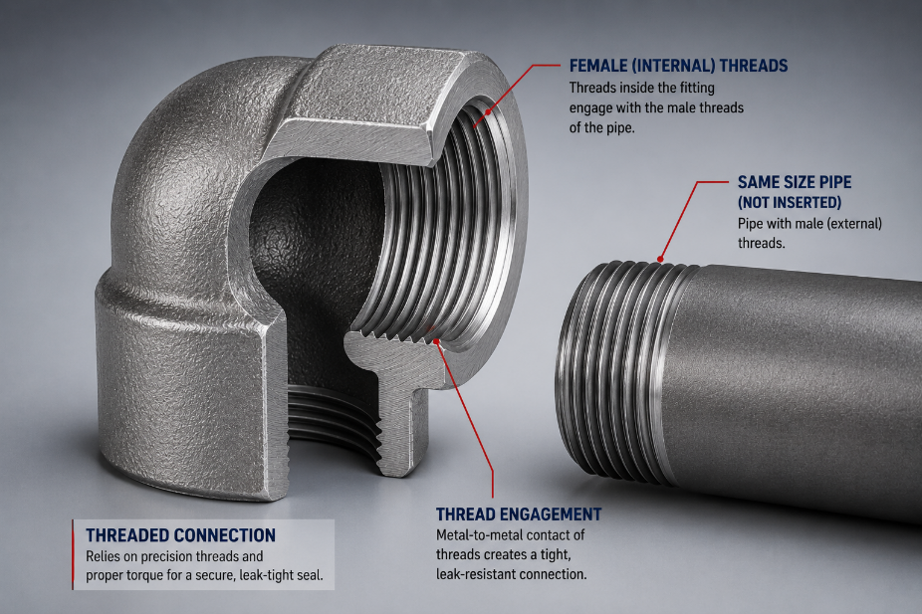
The installation process typically involves:
- Applying thread sealant or PTFE tape
- Aligning threads
- Tightening the connection
- Leak testing
The process is significantly faster than welding and can often be completed without specialized equipment.
Maintenance Considerations
Threaded fittings offer a clear advantage in systems requiring regular maintenance because components can be removed and replaced without cutting or welding.
Socket weld fittings, while highly reliable, are generally considered permanent installations.
When Should You Choose Socket Weld Fittings?
Socket weld fittings are typically the better choice when:
- Operating pressure is high
- Temperature is elevated
- Vibration is present
- Leakage must be minimized
- Long-term reliability is critical
- Maintenance access is limited
Examples include refinery units, steam systems, hydraulic circuits, and process piping in chemical plants.
When Should You Choose Threaded Fittings?
Threaded fittings are often the preferred option when:
- Welding is not practical
- Frequent maintenance is expected
- Installation speed is important
- Project costs must be minimized
- Utility service applications are involved
Examples include instrumentation systems, compressed air networks, and building utility services.
Common Mistakes When Selecting Socket Weld or Threaded Fittings
Many piping failures can be traced to incorrect fitting selection rather than product quality. Common mistakes include:
- Using threaded fittings in high-pressure or high-vibration systems
• Selecting incorrect thread standards (NPT, BSP, BSPT)
• Ignoring operating temperature limitations
• Using carbon steel fittings in corrosive environments without proper protection
• Failing to consider future maintenance requirements during system design
Evaluating pressure, temperature, fluid compatibility, maintenance needs, and installation constraints during the design stage can significantly improve long-term piping reliability.
Conclusion
When comparing Socket Weld vs Threaded Fittings, there is no single solution that fits every application. Socket weld fittings offer superior strength, leak resistance, and reliability, making them ideal for high-pressure and critical industrial services. Threaded fittings provide faster installation, easier maintenance, and lower installation costs, making them attractive for utility and non-critical applications.
The best choice ultimately depends on operating pressure, temperature, maintenance requirements, vibration levels, safety considerations, and project budget. By understanding the strengths and limitations of each connection type, engineers can select the most appropriate fitting solution for long-term piping system performance.
Frequently Asked Questions
1.Can you supply socket weld and threaded fittings in different thread standards?/summary>
2. Can I order socket weld and threaded fittings in stainless steel, carbon steel, and alloy steel?
3.Do you provide material test certificates (MTC) with fittings?
4. Can you manufacture fittings according to ASME B16.11 standards?
5. What pressure classes are available for socket weld and threaded fittings?
6. Can fittings be supplied with custom markings?
7. Do you offer both seamless and forged construction?
8. Can you supply fittings for export projects?
9. What information should I provide when requesting a quotation?
• Fitting type
• Size
• Material grade
• Pressure class
• Thread standard (NPT, BSP, BSPT, etc.)
• Quantity
• Required documentation
• Project destination
This allows us to recommend the most suitable fitting specification and provide pricing quickly.


