


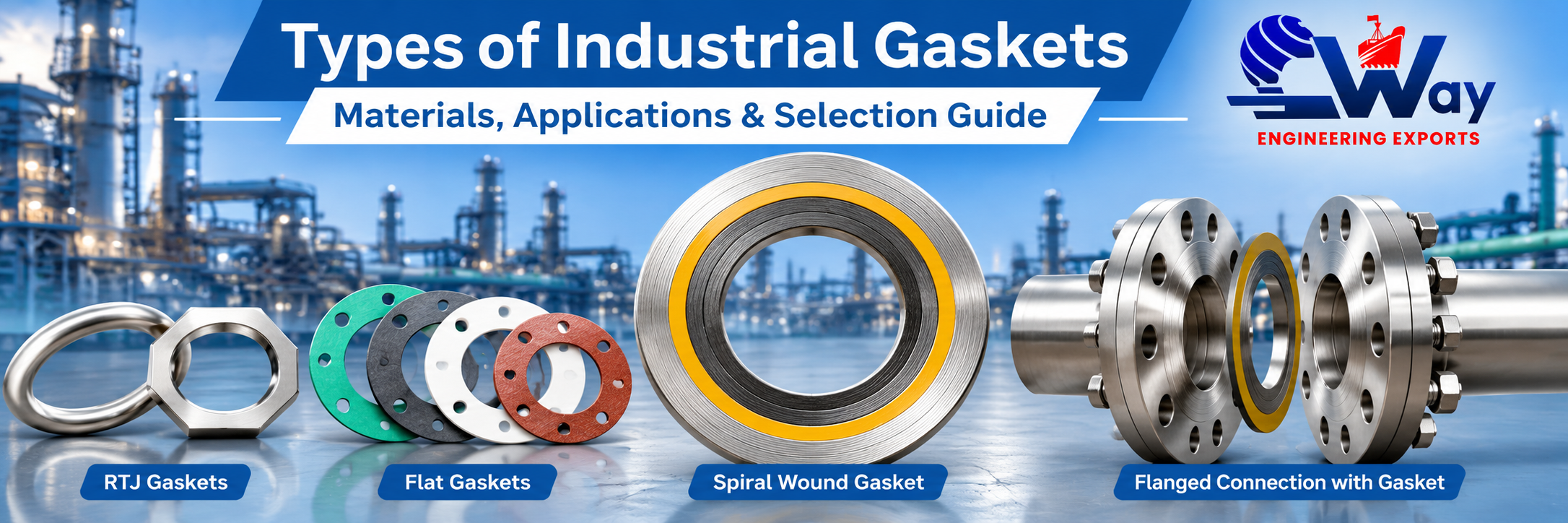
Gasket Applications in Industrial Flanges and Valves
Industrial gaskets are small components, but their role in maintaining the integrity of a piping system is anything but minor. A properly selected gasket helps prevent leakage at flange connections, supports reliable valve operation, and protects equipment from the consequences of fluid or gas escaping under pressure.
In industrial plants, flange connections are exposed to demanding conditions. High temperatures, pressure fluctuations, vibration, corrosive fluids, and repeated heating and cooling can all affect the performance of a sealing joint. Even when the flanges and connecting equipment are manufactured to the correct specifications, an unsuitable gasket or improper installation can result in leakage.
Consider a high-temperature steam pipeline or a chemical processing line operating continuously. If a flange connection begins leaking, the problem may require isolation of the pipeline, replacement of the gasket, and additional maintenance work. In more critical services, leakage can create safety and environmental concerns and interrupt plant operations.
This is why gasket selection deserves the same engineering attention as the selection of valves, flanges, and other pressure-containing components.
Different gasket designs are available to suit different operating conditions. Spiral wound gaskets, Ring Type Joint (RTJ) gaskets, flat gaskets, non-asbestos gaskets, and metallic and semi-metallic gaskets are widely used across oil and gas, petrochemical, chemical processing, power generation, water treatment, and other industries.
Understanding how these gaskets are constructed, where they are used, and what limitations they have helps engineers and procurement professionals make better decisions when specifying piping components.
In this guide, we look at the major types of industrial gaskets, their materials, applications, and the important factors to consider when selecting them for flange and valve connections.
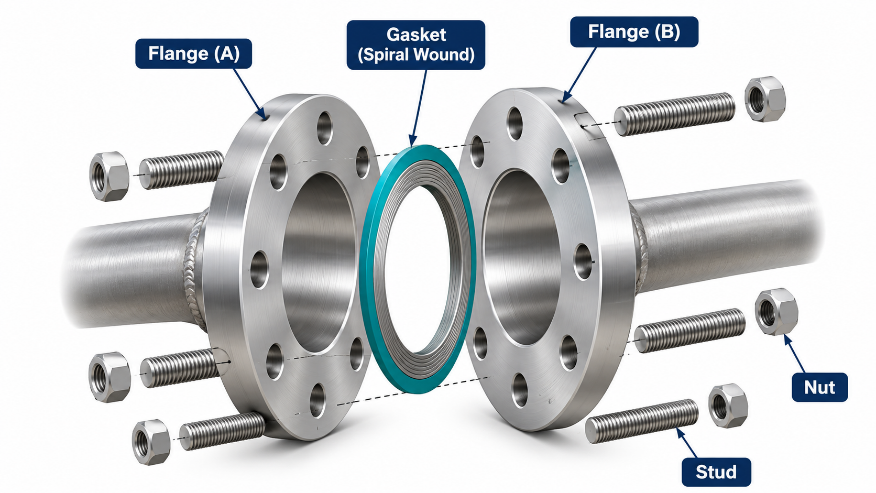
What Is an Industrial Gasket and How Does It Work?
An industrial gasket is a sealing component installed between two mating surfaces to prevent the escape of liquids, gases, steam, or other process media.
In a typical flanged connection, the gasket is placed between two flange faces. When the connecting bolts are tightened, the gasket is compressed and conforms to the small irregularities present on the mating surfaces.
Even accurately machined flange faces have microscopic surface imperfections. These may include machining marks, small variations in surface finish, and minor irregularities. Without a suitable sealing element, these imperfections can create paths through which fluid or gas may escape.
The gasket fills these irregularities and maintains contact pressure across the sealing area.
However, successful sealing depends on more than simply placing a gasket between two flanges. The gasket must receive sufficient compressive stress to establish a seal and retain adequate sealing capability during operation.
The main functions of an industrial gasket include:
- Preventing leakage at bolted flange connections.
- Maintaining sealing integrity under operating pressure and temperature.
- Accommodating minor surface irregularities between mating components.
- Supporting reliable connections in pipelines, valves, pumps, and pressure equipment.
- Reducing product loss, maintenance requirements, and unplanned shutdowns.
It is equally important to understand what a gasket cannot do. It cannot compensate for severely damaged flange faces, incorrect alignment, inadequate bolting, or a poorly designed connection. The entire flange assembly must be suitable for the intended service.
Different Types of Industrial Gaskets
Gaskets are manufactured in different constructions because no single design is suitable for every industrial application.
A gasket used in a high-pressure oil and gas pipeline may have very different requirements from one installed in a water treatment line or chemical processing system.
The most common industrial gasket types are described below.
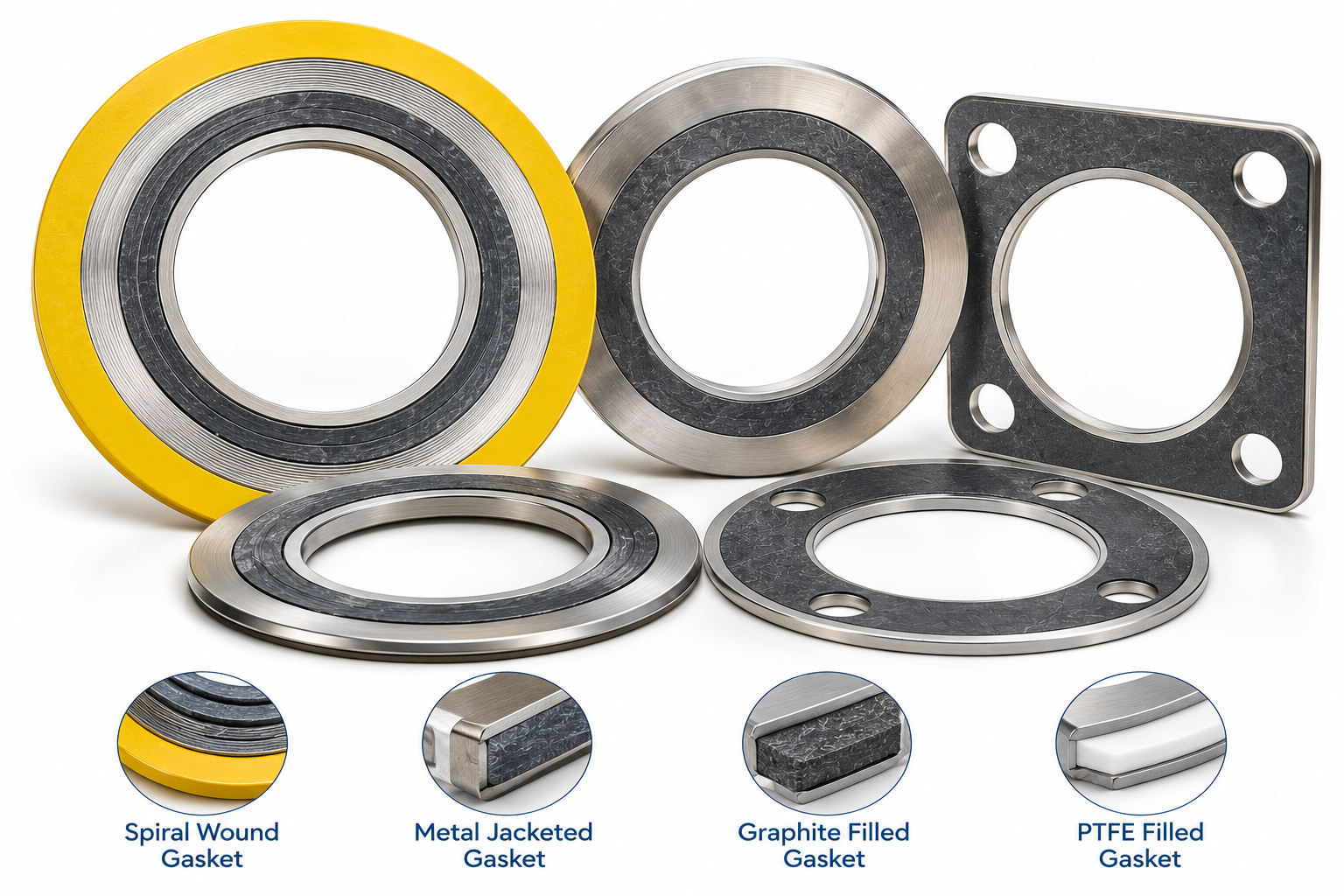
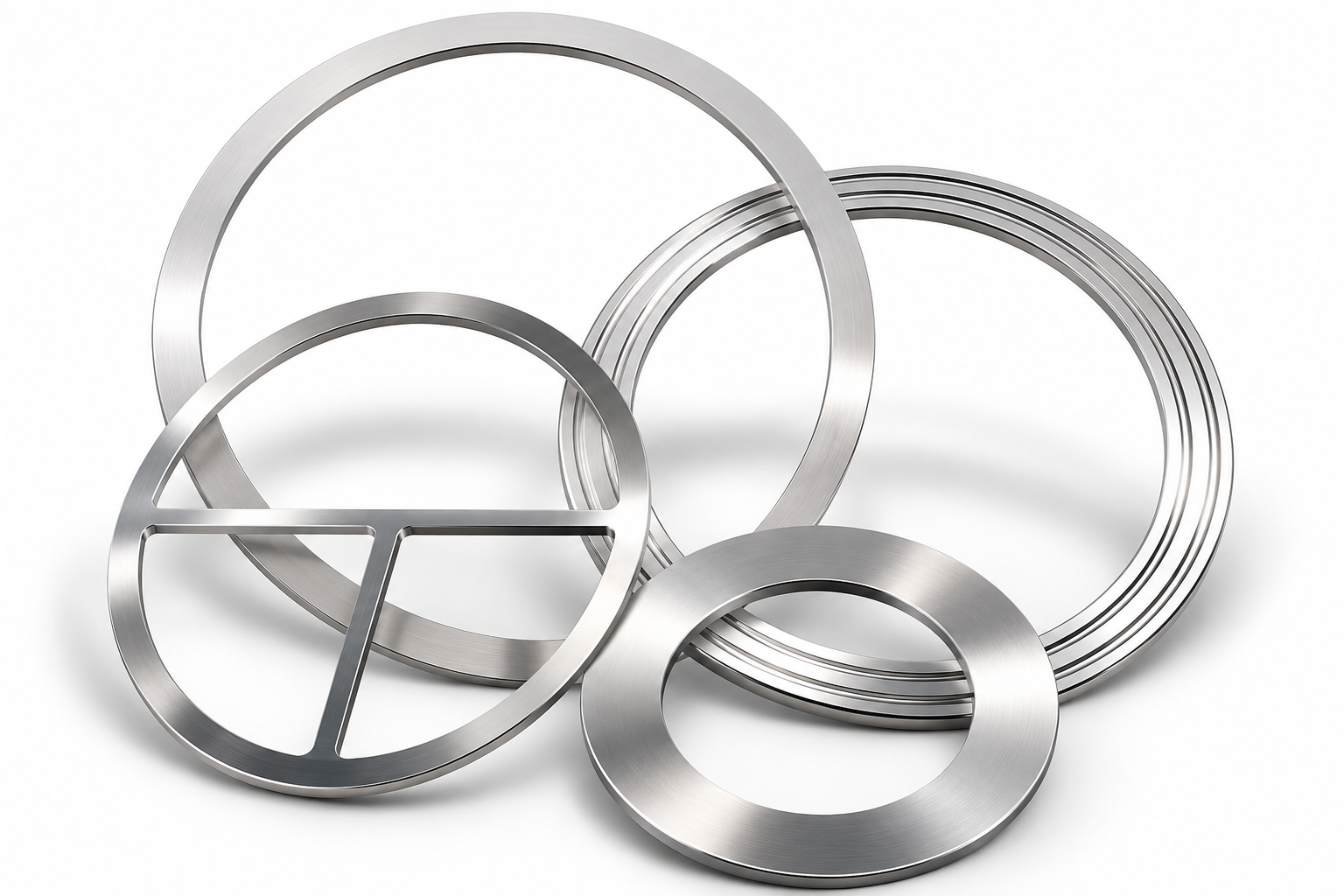
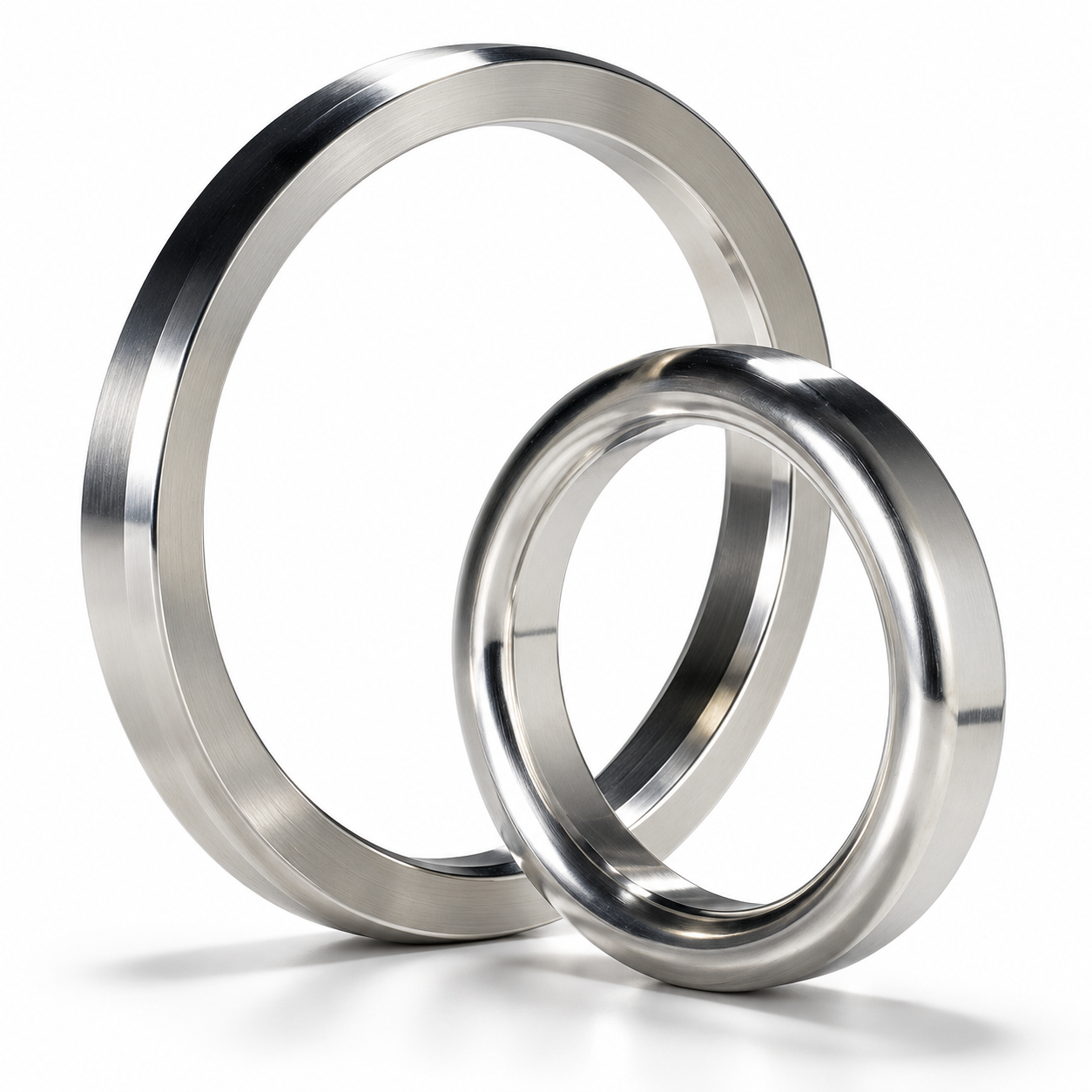
Different Types of Industrial Gaskets and Their Applications
Industrial gaskets are available in different designs and materials to suit specific pressure, temperature, and process conditions. The selection depends on the flange facing, valve connection, operating medium, and sealing requirements.
Spiral Wound Gaskets
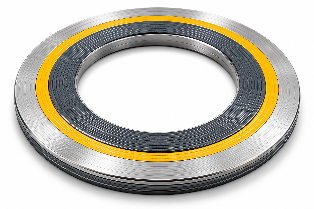
Spiral wound gaskets are widely used in industrial piping systems where pressure,
temperature fluctuations, and reliable sealing are important. They consist of a metallic strip wound together with a soft filler material, such as flexible graphite, PTFE, or mica.
Common construction materials:
- Metallic winding: SS 304, SS 316, SS 316L, Duplex and selected alloys.
- Filler: Flexible graphite, PTFE and mica.
- Inner ring: Stainless steel or specified alloy.
- Outer ring: Carbon steel or stainless steel.
Typical applications:
- Flanges:Raised Face (RF) Weld Neck, Slip-On and other compatible ASME B16.5 flange connections.
- Valves:Flanged-end ball valves, gate valves, globe valves, check valves and suitable butterfly valves.
- Industries:Oil and gas, refineries, petrochemical plants, power generation and chemical processing.
Spiral wound gaskets are particularly useful for applications involving thermal cycling and changing mechanical loads. Their performance depends on the correct combination of winding material, filler, ring configuration and installation conditions.
For applicable pipe flange connections, refer to ASME B16.20.
Ring Type Joint (RTJ) Gaskets
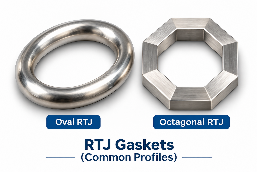
Ring Type Joint (RTJ) gaskets are solid metallic sealing components designed for demanding high-pressure flange connections. They are installed in specially machined grooves on mating flange faces. Bolt tightening compresses the metallic ring against the groove surfaces to establish a seal.
Common profiles:
- Oval RTJ.
- Octagonal RTJ.
Common materials: Soft Iron, Low Carbon Steel, Stainless Steel 304/316 and specified corrosion-resistant alloys.
Typical applications:
- Flanges:RTJ-faced Weld Neck and Blind flanges with matching machined grooves.
- Valves:RTJ-end ball valves, gate valves, globe valves and check valves designed for RTJ flange connections.
- Industries:Oil and gas, offshore drilling, wellhead installations, refineries and high-pressure process systems.
RTJ gaskets are commonly selected for high-pressure services where metal-to-metal sealing is required. The gasket profile, ring number, dimensions and material must match the flange groove specifications.
For applicable pipe flange connections, refer to ASME B16.20. RTJ gaskets should generally be replaced after disassembly.
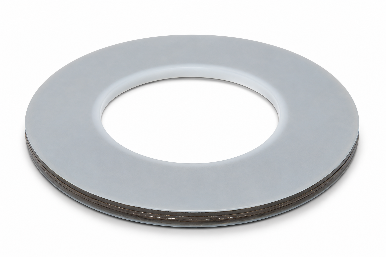 Flat Gaskets
Flat gaskets are manufactured from sheet materials and cut to the required dimensions for flange connections. They are commonly used in general industrial piping, water systems, chemical processing and equipment connections.
Common materials:
- Compressed non-asbestos fiber.
- Flexible graphite.
- EPDM and other suitable elastomers.
Typical applications:
- Flanges:Compatible Flat Face (FF) and Raised Face (RF) flanges, depending on gasket material and joint design.
- Valves:Flanged-end butterfly valves, ball valves, gate valves, globe valves and check valves, where specified by the valve and gasket manufacturers.
- Industries:Water treatment, wastewater, HVAC, chemical processing and general industrial services.
Flat gaskets are available in different thicknesses and material grades. Selection should consider chemical compatibility, compressibility, temperature, pressure and flange surface condition.
ASME B16.21 covers nonmetallic flat gaskets for applicable pipe flange connections.
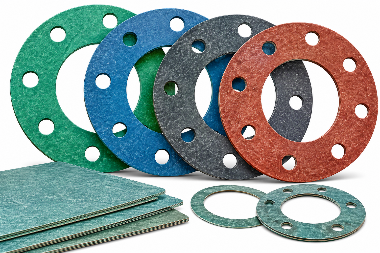 Non-Asbestos Gaskets
Non-asbestos gaskets are manufactured as alternatives to traditional asbestos-containing materials. They generally consist of reinforcing fibers, fillers and elastomeric binders, which are processed into compressed gasket sheets.
Common reinforcement materials: Aramid, glass and other suitable fibers, with compatible binder systems.
Typical applications:
- Flanges:Suitable Raised Face and Flat Face flange connections, depending on the gasket manufacturer’s recommendations.
- Valves:Flanged-end gate valves, globe valves, ball valves and check valves used in compatible general industrial services.
- Industries:Water treatment, utility piping, pumps, general industrial plants and selected oil and gas applications.
Non-asbestos gaskets offer good compressibility and general-purpose sealing characteristics. However, their suitability depends on the fiber composition, binder system, process fluid and operating conditions.
Always verify the manufacturer’s pressure-temperature data before selecting a gasket.
Metallic Gaskets
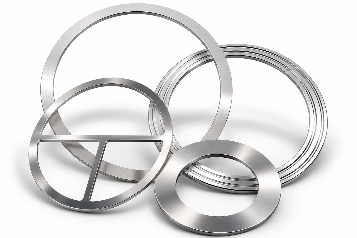 Metallic gaskets are manufactured from metal and are used in applications requiring specialized sealing arrangements and mechanical strength. They rely on controlled contact geometry and sufficient sealing stress to establish an effective seal.
Common materials:
- Stainless Steel 304 and 316.
- Carbon Steel.
- Soft Iron.
- Inconel and other nickel alloys.
Typical applications:
- Flanges:RTJ-faced Weld Neck and Blind flanges, as well as specially designed metallic sealing connections.
- Valves:High-pressure RTJ-end ball valves, gate valves, globe valves and other valves specifically designed for metallic gasket connections.
- Industries:Oil and gas, offshore installations, refineries, steam systems and specialized chemical processing.
Metallic gasket performance depends on material hardness, corrosion resistance, surface condition, flange groove geometry and applied sealing stress. The gasket must be compatible with the specified flange or equipment design.
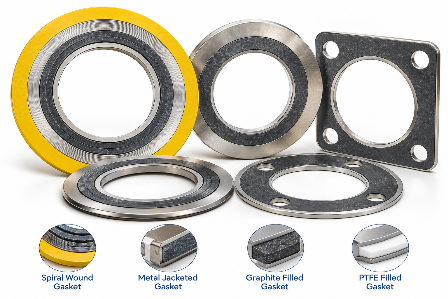 Semi-Metallic Gaskets
Semi-metallic gaskets combine metallic reinforcement with non-metallic sealing materials. This construction provides a balance between mechanical strength, flexibility and sealing performance.
Spiral wound and metal-jacketed gaskets are common examples.
Typical materials:
- Stainless steel or carbon steel reinforcement.
- Flexible graphite.
- Mica and other application-specific fillers.
Typical applications:
- Flanges:Compatible Raised Face flanges and specially designed flange or equipment connections.
- Valves:Flanged-end gate valves, globe valves, ball valves and check valves where the specified joint design permits their use.
- Industries:Refineries, chemical and petrochemical plants, power generation, heat exchangers and industrial process piping.
Semi-metallic gaskets are particularly useful when a soft gasket alone may not provide sufficient mechanical stability. Their construction and material combination must be selected according to the actual service requirements.
Industrial Gasket Materials and Their Properties
Selecting the gasket construction is only part of the decision. The material must also be suitable for the process fluid, temperature, pressure, and surrounding environment.
Two gaskets with similar external dimensions may have very different operating characteristics because of differences in their material composition.
| Material | Main Characteristics | Typical Applications |
|---|---|---|
| Flexible Graphite | Compressibility and good thermal sealing characteristics | Steam, refineries, process piping |
| PTFE | Resistance to many corrosive chemicals | Chemical processing |
| Stainless Steel | Mechanical strength and grade-dependent corrosion resistance | Metallic and semi-metallic gaskets |
| Compressed Non-Asbestos Fiber | General-purpose sealing properties | Water and industrial piping |
| EPDM | Elasticity and suitable water-service performance | Water treatment and HVAC |
| Soft Iron | Suitable mechanical properties for specified RTJ applications | Ring-joint flange connections |
Understanding Pressure and Temperature Limitations
One important point in gasket selection is that there is no single pressure-temperature rating applicable to all gasket materials or constructions.
The allowable operating conditions depend on the complete gasket design, including filler composition, metallic reinforcement, material grade, thickness, flange configuration, and applied compression.
For example, flexible graphite is widely used in elevated-temperature applications. However, its oxidation behavior in air and its compatibility with the process environment must be considered.
PTFE offers excellent resistance to many chemicals, but it can undergo creep and cold flow under sustained compressive loading. Its temperature and pressure limitations therefore need careful evaluation.
Similarly, compressed non-asbestos gaskets are available in different formulations, and their operating limits vary according to the fiber and binder system.
Manufacturers such as KLINGER and Garlock publish product-specific technical information, including temperature guidance, pressure limitations, and application recommendations.
These figures should not be applied universally to all products made from the same material. Engineers should always refer to the current manufacturer’s datasheet for the exact gasket construction being considered.
Applications of Industrial Gaskets Across Different Industries
Industrial gaskets are essential sealing components used in pipelines, valves, pumps, and process equipment across various industries. The right gasket material and construction help prevent leakage and maintain reliable flange connections under different operating conditions.
Oil & Gas Industry
Spiral wound and RTJ gaskets are widely used in oil and gas pipelines, offshore platforms, refineries, wellhead equipment, and high-pressure valve connections.
Chemical & Petrochemical Industry
PTFE, graphite, and semi-metallic gaskets are selected for chemical processing pipelines, storage systems, pumps, and valves based on fluid compatibility, pressure, and temperature.
Power Generation Industry
Industrial gaskets are used in steam pipelines, boilers, turbines, heat exchangers, and power plant equipment, where thermal resistance and sealing reliability are critical.
Water & Wastewater Treatment
Flat and elastomeric gaskets are commonly used in water pipelines, treatment plants, pumps, butterfly valves, and flanged connections. Material compatibility is important for reliable water service.
Pharmaceutical & Food Processing
Specialized gaskets are used in sanitary pipelines, pumps, and processing equipment. Material selection must meet hygiene, chemical compatibility, cleaning, and applicable regulatory requirements.
How to Select the Right Industrial Gasket
Selecting the right industrial gasket is essential for preventing flange leakage and maintaining reliable connections in pipelines, valves, and process equipment. Before choosing a gasket, consider the following engineering factors:
- Operating Pressure:Select a gasket suitable for the design and operating pressure of the flange joint.
- Operating Temperature:Check the gasket’s temperature limitations, compressibility, and resistance to thermal cycling.
- Chemical Compatibility:Ensure the gasket material is compatible with the process fluid to prevent corrosion, swelling, or material degradation.
- Flange Facing Type:Match the gasket to the flange facing:
- Raised Face (RF).
- Flat Face (FF).
- Ring Type Joint (RTJ).
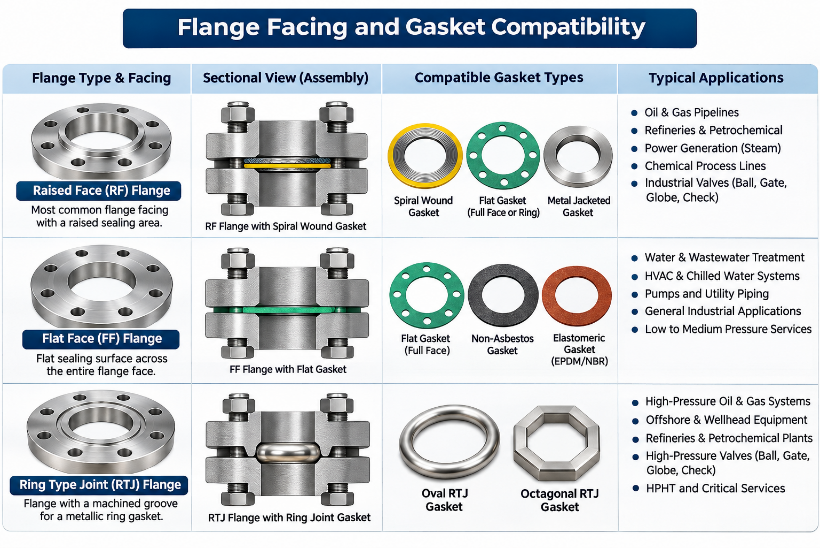
- Gasket Dimensions:Verify the inside diameter, outside diameter, thickness, and seating dimensions against the applicable specifications.
- Bolting and Installation:Consider bolt material, lubrication, tightening sequence, and required gasket compression. Follow an appropriate flange assembly procedure.
Gasket Applications in Industrial Flanges and Valves
Industrial flange gaskets provide sealing between mating components and help prevent leakage in piping systems. Their selection depends on flange facing, pressure class, dimensions, material, and operating conditions.
Common flange types include Weld Neck, Slip-On, Blind, Socket Weld, and Threaded flanges.
Gaskets Used in Industrial Valves
Gaskets are commonly used in the following valve connections:
- Ball Valves:Seal flanged valve connections to pipelines.
- Gate Valves:Used in flanged end connections and certain bolted body-to-bonnet joints.
- Globe Valves:Provide sealing in pipeline connections and applicable bolted bonnet designs.
- Butterfly Valves:Use manufacturer-specified gaskets or sealing arrangements for wafer, lug, and flanged designs.
- Check Valves:Provide sealing between valve end flanges and pipeline connections.
Valve Body-to-Bonnet Gaskets
Certain bolted-bonnet gate and globe valves use gaskets between the valve body and bonnet to maintain pressure-boundary integrity. The gasket material must be compatible with the operating pressure, temperature, process fluid, and valve construction.
These gaskets are different from valve stem packing, which prevents leakage around the moving valve stem.
Selecting compatible valves, flanges, and sealing components is essential for achieving reliable and leak-resistant piping connections.
Common Causes of Industrial Gasket Leakage and How to Prevent Them
Gasket leakage is a common problem in industrial piping systems and flanged valve connections. It can result from incorrect gasket selection, damaged flange faces, improper bolting, or poor installation practices.
Common Causes of Gasket Leakage
- Incorrect Gasket Selection:Using incompatible gasket materials for the operating pressure, temperature, or process fluid can cause premature failure.
- Damaged Flange Faces:Scratches, corrosion, pitting, and surface defects can create leakage paths.
- Uneven Bolt Tightening:Unequal bolt loading causes inconsistent gasket compression and localized leakage.
- Incorrect Bolt Torque:Insufficient tightening or excessive compression can compromise gasket sealing performance.
- Flange Misalignment:Angular or lateral misalignment can prevent uniform gasket compression.
- Thermal Cycling and Pressure Fluctuations:Repeated temperature changes, vibration, and pressure variations can reduce sealing stress.
- Reusing Old Gaskets:Previously compressed gaskets may lose their original sealing and recovery characteristics.
How to Prevent Industrial Gasket Leakage
Follow these practices to improve flange joint sealing and reduce maintenance problems:
- Select the correct gasket material and dimensions.
- Inspect flange faces before gasket installation.
- Ensure proper flange alignment.
- Use suitable bolts, nuts, and lubrication.
- Follow the recommended bolt tightening sequence.
- Apply the specified bolt loading using appropriate tools.
- Install new gaskets when reopening flange connections, as recommended by the manufacturer.
For reliable pressure-boundary flange joint assembly, refer to ASME PCC-1, which provides guidance on flange inspection, bolting procedures, installation practices, and leakage troubleshooting.
International Standards for Industrial Gaskets and Flanges
Industrial gaskets and flanged connections are manufactured according to international standards covering dimensions, materials, design, testing, and installation. The following ASME, DIN, EN, ISO and other standards are commonly referenced in industrial piping applications.
| Standard | Description | Application |
|---|---|---|
| ASME B16.20 | Metallic Gaskets for Pipe Flanges | Metallic gasket requirements |
| ASME B16.21 | Nonmetallic Flat Gaskets | Nonmetallic flat gaskets |
| ASME B16.5 | Pipe Flanges and Flanged Fittings | Flange dimensions and pressure-temperature ratings |
| ASME PCC-1 | Bolted Flange Joint Assembly | Inspection, bolting and assembly guidance |
| EN 1514 Series | Gaskets for PN-designated flanges | European flange gasket specifications |
| EN 12560 Series | Gaskets for Class-designated flanges | Class-rated flange gasket requirements |
| EN 1092-1 | Steel Flanges – PN Designated | European flange dimensions |
| EN 1759-1 | Steel Flanges – Class Designated | Class-rated flange systems |
| EN 13555 | Gasket Parameters and Test Procedures | Gasket performance testing |
| EN 1591-1 | Design of Gasketed Flange Connections | Flange joint engineering calculations |
| ISO 7483 | Dimensions of Gaskets for Flanges | Gasket dimensions |
| JIS B 2404 | Gaskets for Pipe Flanges | Japanese industrial gasket specifications |
Each standard covers specific aspects of gasket construction, flange compatibility, dimensions, testing, or joint assembly. Selection should follow the applicable project specification and the manufacturer’s technical datasheet.
Important: A flange pressure-temperature rating does not automatically establish the allowable operating limits of the installed gasket. The complete flange joint must be suitable for the intended service.
Conclusion
Industrial gaskets play an essential role in preventing leakage and maintaining the reliability of industrial piping systems, valves, and process equipment.
Selecting the right gasket depends on its construction, material compatibility, operating pressure, temperature, and flange configuration. Spiral wound, RTJ, flat, non-asbestos, metallic, and semi-metallic gaskets each serve different industrial applications.
For engineers, EPC contractors, and procurement professionals, understanding gasket selection and proper installation helps reduce flange leakage, minimize maintenance, and improve equipment reliability.
C-Way Engineering Exports – Industrial Valves and Piping Solutions for Global Markets.
Technical References and Further Reading
The following international standards and manufacturer resources provide additional information on gasket construction, material properties, flange requirements, and bolted flange joint assembly.
International Standards for Industrial Gaskets and Flanged Joints
Industrial gaskets and bolted flange joints are manufactured, specified, and assembled according to applicable international standards to ensure dimensional compatibility, material suitability, and reliable sealing performance.
International Standards
- ASME B16.20 – Metallic Gaskets for Pipe Flanges
- ASME B16.21 – Nonmetallic Flat Gaskets for Pipe Flanges
- ASME B16.5 – Pipe Flanges and Flanged Fittings
- ASME PCC-1 – Guidelines for Pressure Boundary Bolted Flange Joint Assembly
Note: The applicable standard, gasket material, dimensions, and assembly procedure should be selected based on the flange design, operating pressure, temperature, fluid, and project specifications.
Manufacturer Technical Resources
- KLINGER – Industrial Gasket and Sealing Solutions
- Garlock – Industrial Gasketing Products and Technical Resources
- Flexitallic – Industrial Gasket Products and Technical Resources
Technical Note: Gasket pressure-temperature limitations and material suitability vary by construction, material grade, manufacturer, flange configuration, and process conditions. Always consult the current product datasheet and applicable project specifications before selecting or approving a gasket for a particular service.
Frequently Asked Questions About Gaskets Used in Industrial Valves, Flanges and Pipe Fittings
1. What type of gasket is used in industrial flange connections?
2. Are gaskets required for industrial valves?
3. Which gaskets are used for ball, gate, globe and check valves?
4. What type of gasket is suitable for butterfly valves?
5. What is the difference between spiral wound and RTJ gaskets?
6. Which gasket is used with raised face (RF) flanges?
7. Which gasket is used with flat face (FF) flanges?
8. Do all pipe fittings require gaskets?
9. Can the same gasket be used for valves and pipe flanges?
10. What causes gasket leakage in industrial valves and flanges?
11. Can gaskets be reused after removing an industrial valve or flange?
12. Which standards apply to industrial gaskets and flanges?
13. How do I select the right gasket for an industrial valve or flange?
14. What information is required when specifying gaskets for industrial valves and piping?


